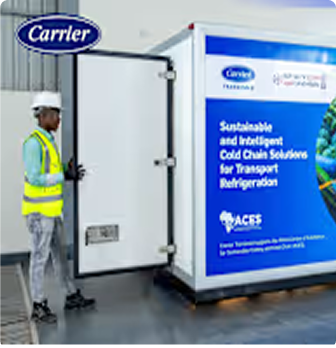
Home Unlocking the Power of the Cold Chain with Carrier® Transicold from Mandilas In a world where precision and quality matter, Mandilas …

THE IMPACT OF COVID -19 ON THE
AUTOMOTIVE INDUSTRY
The COVID-19 pandemic, caused by the SARS-CoV-2 virus, has left an indelible mark on the world. While some experienced mild symptoms, others faced severe consequences. Beyond health, the virus has significantly disrupted various sectors, including the automotive industry.
Global Supply Chain Disruptions
At the heart of the automotive industry’s challenges during the pandemic was its heavy reliance on global supply chains, with more than 80 percent linked to China. Hubei, one of China’s major automotive production hubs, housed over 100 automotive suppliers. When the pandemic hit, lockdowns forced closures and reduced production capacity worldwide.
The impact was particularly pronounced in the supply of essential components like semiconductors, predominantly manufactured in China. These disruptions led to a global reduction in vehicle production and supply, affecting markets worldwide.
Economic Ramifications
The automotive sector is a linchpin of global economic growth and employment. The ripple effect of reduced vehicle supply was felt in multiple ways. The scarcity of models, from passenger vehicles to utility vehicles, hampered retail sales. One of the pandemic’s side effects was the rising cost of vehicles, driven by demand shocks due to diminished purchasing power.
Local Implications
In Nigeria, the global crisis added to existing economic challenges. The nation grappled with both the pandemic’s impact and domestic issues, including government policies, high customs tariffs, exchange rate volatility, the cost of living, and reduced purchasing power. Fueling vehicles became more expensive, compounding the challenges faced by Nigerian consumers.
The Uncertain Road Ahead
Uncertainty surrounds future car demand as consumer behavior shifts. Remote working, encouraged by the pandemic, has reduced the need for personal vehicles. Simultaneously, concerns about using public transportation have emerged, potentially driving up demand for private vehicles. A transformation in demand, such as increased interest in rental cars or car-sharing, may also take place.
The Way Forward
Amid these challenges, government policies and people-friendly initiatives hold the potential to stimulate economic recovery. Foreign investment, driven by an improved investment climate, can bolster foreign exchange reserves and enhance purchasing power. Structural transformations, especially in the transport and automotive sectors, are critical. Policies supporting digital transformation and local vehicle assembly can play a pivotal role in sustaining and reviving the economy.
The automotive industry, like many others, faces ongoing uncertainty. Adaptability and innovation will be key to navigating these uncharted waters.
Empowering Your Mobility
In these challenging times, the automotive industry has proven its resilience and adaptability. As we navigate this ever-changing landscape, Mandilas stands ready to empower your mobility needs.
If you’re facing mobility challenges or seeking solutions, whether it’s finding the right vehicle, servicing your existing one, or exploring innovative solutions to enhance your mobility experience. You can reach out to us on social media@mandilasgroup, on our website or by calling 07001235656.

Mobility Solutions
HVAC Solutions
Resources
©️ 2026 Mandilas Group Limited. All rights reserved.
- Privacy Policy
- Terms of Use
- Cookie Policy
Request Wheel Balancing & Alignment Service
Complete the form below and our service team will contact you within 24 hours.
Accident Recovery
Complete the form below and our service team will contact you within 24 hours.
Spare Part Request
Kindly give details of the part you will need.
Body Work & Refurbishment
Complete the form below and our service team will contact you within 24 hours.
Request Routine & Maintenance Service
Complete the form below and our service team will contact you within 24 hours.
Partner Retail Outlets
Outlet Locations
Belanova
VI, Lagos
- Celestine
- Active
Deluxe Product
Surulere, Lagos
- Friday
- Active
Belanova
Lekki, Lagos
-
Precious
- Active
Kendo Electronics
Lagos Island
- Kenechi
- Active
Koshar
Ajah, Lagos
- Ricky
- Active
Mavenax
Ajah, Lagos
- Ugo
- Active
MBE Electronics
VI, Lagos
- Hussein
- Active
Mega Plaza
VI, Lagos
- Sammy/Godstime
- Active
Electronica eastern Bypass
Port Harcourt
- Olatoro
- Active
Winterplace
Abuja
- Bassey
- Active
Blue Breeze
Antony, Lagos
- Charles
- Active
Glemliveth
Ikeja, Lagos
- Active
Sales and After Sales Support
Group
Cooling
Commercial Sales
Surajudeen Kolawole
Head, Technical Sales & Applications
- 09055693014, 07031661368
- surajudeen.kolawole@mandilasng.com
Mobility
Spare Parts
Samuel Olorunfemi
Spare Parts Manager
- 08027075618, 017402896
- samuel.olorunfemi@mandilasng.com
Service Appointment
Babalola Oluwatimilehin
Customer Service Officer
Auto Quick Service Centers
Bringing expert auto care closer to you. These are our quick Service Offerings here at Mandilas
- General Maintenance
- Wheel Balancing & Alignment
- General Maintenance
- Type Change
- Quick Oil Change
- Genuine Spare Parts Sales
Our Locations
Lekki
Mobil Filling Station, Lekki-Epe Expressway, Jakande Bus Stop
- Centre Coordinator
- Suraju Sofola
- 07001235656,07039867069
- mandilas@mandilasng.com Lekkiqsc@mandilasng.com
Ikeja
Eterna Filling Station, Ogba
- Branch Manager
- Christopher Isiekwena
- 07001235656,08037843834
- christopher.isiekwene@mandilasng.com
Ikoyi
NNPC Mega Station
38, Alfred Rewane Road, Beside Ikoyi Club
- Centre Coordinator
- Daniel Ofeoshi
- 07001235656,08080761535
- daniel.ofeoshi@mandilasng.com mandilas@mandilasng.com
Auto Workshop Locations
- Routine Maintenance
- Bodyworks and refurbishment
- Accident Recovery
- Car Accessories/Genuine Spare Parts Sale
Professional & personalized solutions for your comfort and peace of mind. At Mandilas we offer this services in our workshop
Our Locations
Lagos Island
35, Simpson Street, Sura Shopping Complex
Customer Service OfficeBabalola Olatimilehin:
09032634950 mandilascro@mandilasng.com
Warri
10, Obasanjo Way, Oluyole Estate
Branch Manager
Amaka Nwakanma:
07001235656, 08033279120
amaka.nwakanma@mandilasng.com; mandilasibadan@mandilasng.com
Abuja
Plot 1055, Anthony Ani Street, Opp. Finance Quarters, Off Idris Gidado Road, Wuye District
Branch HeadEzra Okorie:
09032634950 mandilascro@mandilasng.com
Port Harcourt
85, Trans Amadi Layout
Branch ManagerIfeanyi Onyenuwe:
07001235656, 09062386638 Ifeanyi.Onyenuwe@mandilasng.com; mandilasph@mandilasng.
✕